In the pharmaceutical, biotech, and cosmetic industries, precision is not just a standard—it is a regulatory and operational mandate. Among the core pieces of equipment ensuring this precision, the vial filling machine stands out as an indispensable asset. Whether you are packaging life-saving vaccines, liquid injectables, or high-value serums, understanding the mechanics behind these machines is essential for optimizing production efficiency and maintaining strict quality control.
At Harsiddh Machines (www.harsiddhmachines.com), we engineer high-performance pharmaceutical packaging infrastructure designed to deliver uncompromised accuracy and sterile operational safety. In this comprehensive guide, we will break down the intricate inner workings of a vial filling machine, exploring its core components, its step-by-step operational cycle, and the cutting-edge technologies that ensure zero-waste, contamination-free packaging.
1. Introduction to Vial Filling Machinery
A vial filling machine is an automated or semi-automated system designed to dispense precise volumes of liquid, powder, or viscous products into glass or plastic vials. Unlike standard bottle fillers, vial fillers operate under stringent aseptic conditions, often integrated into complete sterile lines that include washing, sterilization, filling, stoppering, and capping.
The primary objective of modern vial filling equipment is twofold:
- Dosing Accuracy: Ensuring every container receives the exact volume required, minimizing product giveaway of expensive formulations.
- Contamination Control: Preventing any external particulate matter, microbial presence, or cross-contamination from compromising the sterile product.
2. Key Components of an Automated Vial Filling Line
To understand how a vial filler works, it helps to first look at the anatomical structure of the machine. A high-efficiency line manufactured by Harsiddh Machines relies on several synchronized stations:
A. Feed and Turn-Table Mechanisms
Vials arrive in bulk and must be organized into a single-file line. An infeed turn-table or rotary unscrambler gently guides the empty vials onto a conveyor belt without causing glass-to-glass damage or breakage.
B. Conveyor Transport System
A highly synchronized conveyor track or star-wheel indexing mechanism moves the vials precisely from one station to the next. The movement can be continuous or intermittent, depending on the machine’s design and output requirements.
C. Filling Nozzles and Pumps
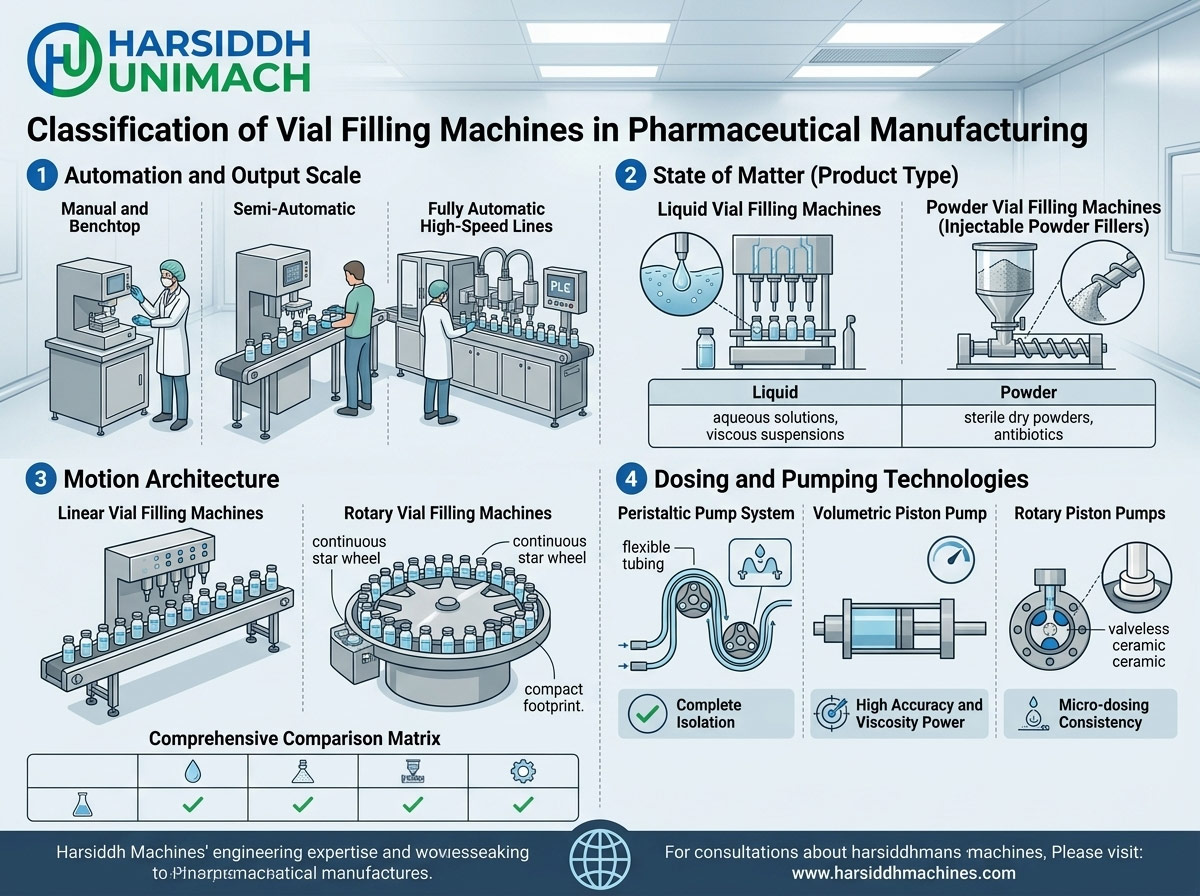
The core filling assembly consists of specialized nozzles linked to high-precision dosing pumps. Depending on the product characteristics, these can include:
- Peristaltic Pumps: Ideal for sterile biopharmaceuticals because the liquid only touches the disposable tubing, eliminating cross-contamination risks.
- Piston Pumps (Volumetric): Excellent for consistent, high-speed dispensing of liquids with varying viscosities.
- Rotary Piston Pumps: Known for extreme accuracy over long production runs.
D. Stoppering/Plugging Station
Immediately after filling, vials pass to the stoppering unit. This mechanism gently but firmly places a rubber stopper (or bung) onto the neck of the vial, partially or fully sealing it before it reaches the final capping stage.
E. Sealing and Capping Station
For injectables, a secure seal is vital. An aluminum cap or flip-off seal is fed via a vibratory bowl feeder and crimped tightly around the rubber stopper using a specialized roller capping head.
3. The Step-by-Step Vial Filling Process
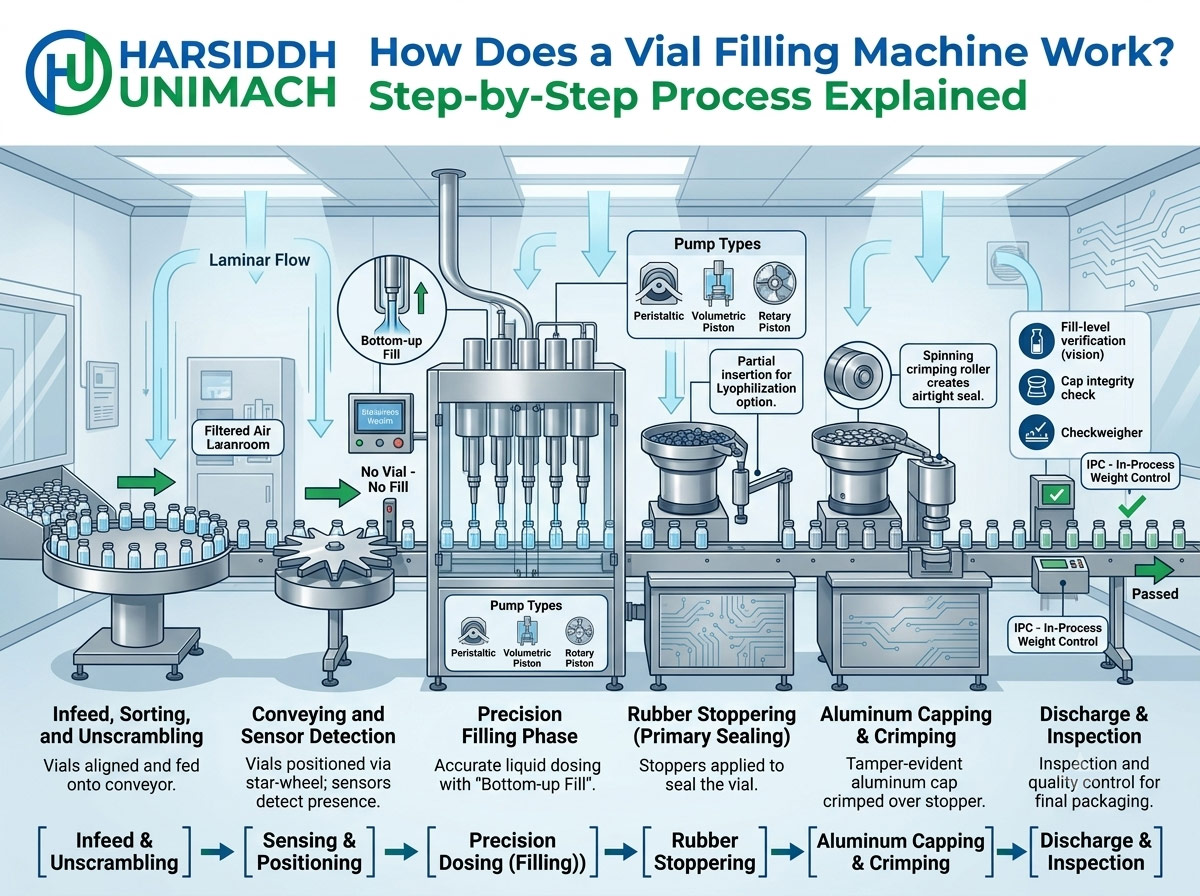
The transformation of an empty, sterile vial into a securely sealed, market-ready product involves a highly coordinated sequence of operations. Here is exactly how a professional-grade filling line completes this cycle.
[Infeed & Unscrambling] ➔ [Sensing & Positioning] ➔ [Precision Dosing (Filling)]
                                                                │
[Aluminum Capping & Crimping] ◄ [Rubber Stoppering] ◄───────────┘
Step 1: Infeed, Sorting, and Unscrambling
The process begins with the introduction of sterilized, depyrogenated vials to the machine’s infeed section.
- Vials are placed onto a stainless steel rotary turn-table.
- As the table rotates, a guide arm gently forces the vials to align into a single file line.
- The vials are then transferred onto a linear conveyor belt.
Step 2: Conveying and Sensor Detection
As the vials move along the track, they pass through an optical sensing array.
- “No Vial – No Fill” System: Modern systems feature an electronic interlocking sensor. If a gap in the conveyor line occurs and no vial is detected under a specific nozzle, the machine automatically pauses that specific pump. This prevents messy spills, product loss, and machine downtime.
- Star-Wheel Indexing: In many high-speed lines, a custom-machined star wheel captures individual vials in precise pockets, positioning them perfectly beneath the filling heads.
Step 3: The Precision Filling Phase
Once the vials are locked into position beneath the filling manifold, the automated dosing cycle initiates.
- Nozzle Descent: The filling nozzles lower into the neck of the vials. For liquids prone to foaming, a “bottom-up fill” technique is used, where the nozzle plunges to the bottom of the vial and retracts slowly as the liquid rises.
- Dosing Activation: The pumps (peristaltic or volumetric) deliver the exact pre-set volume.
- Drip Elimination: Advanced diving nozzles feature a suck-back or positive shut-off mechanism to ensure that not a single drop clings to the tip or falls onto the outer neck of the vial, which could interfere with the subsequent sealing process.
Step 4: Rubber Stoppering (Primary Sealing)
Once filled, the vials immediately transition to the stoppering unit to minimize the liquid’s exposure to the environment.
- Rubber stoppers are sorted and oriented via a vibratory bowl feeder and delivered down a feed chute.
- As the filled vial moves underneath the chute, a mechanical pick-and-place arm or a direct line-feed mechanism presses the stopper into the vial opening.
- Note for Lyophilization (Freeze-Drying): If the product requires freeze-drying, the machine is configured to apply the stoppers only partially. This leaves open vents that allow moisture to escape during the subsequent lyophilization cycle before the vials are fully sealed inside the freeze-dryer.
Step 5: Aluminum Capping and Crimping (Secondary Sealing)
To guarantee tamper-evident protection and maintain the integrity of the primary rubber seal, an outer aluminum cap must be applied.
- The stoppered vials move to the capping station.
- An aluminum cap is fed from a separate vibratory bowl and placed over the rubber stopper.
- A spinning crimping roller or sealing head applies uniform peripheral pressure around the skirt of the aluminum cap, tucking it tightly under the vial’s neck ring. This creates a hermetic, airtight seal.
Step 6: Discharge and Inspection
The fully filled and sealed vials exit the indexing wheel or conveyor track toward the discharge zone. Here, they undergo rigorous quality control inspections, which may include:
- Fill-level verification via vision systems.
- Cap integrity checks to ensure proper crimping force was applied.
- Weight verification using integrated checkweighers.
Vials that pass inspection move directly onward to labeling, cartoning, and final packaging.
4. Advanced Technologies in Modern Vial Fillers
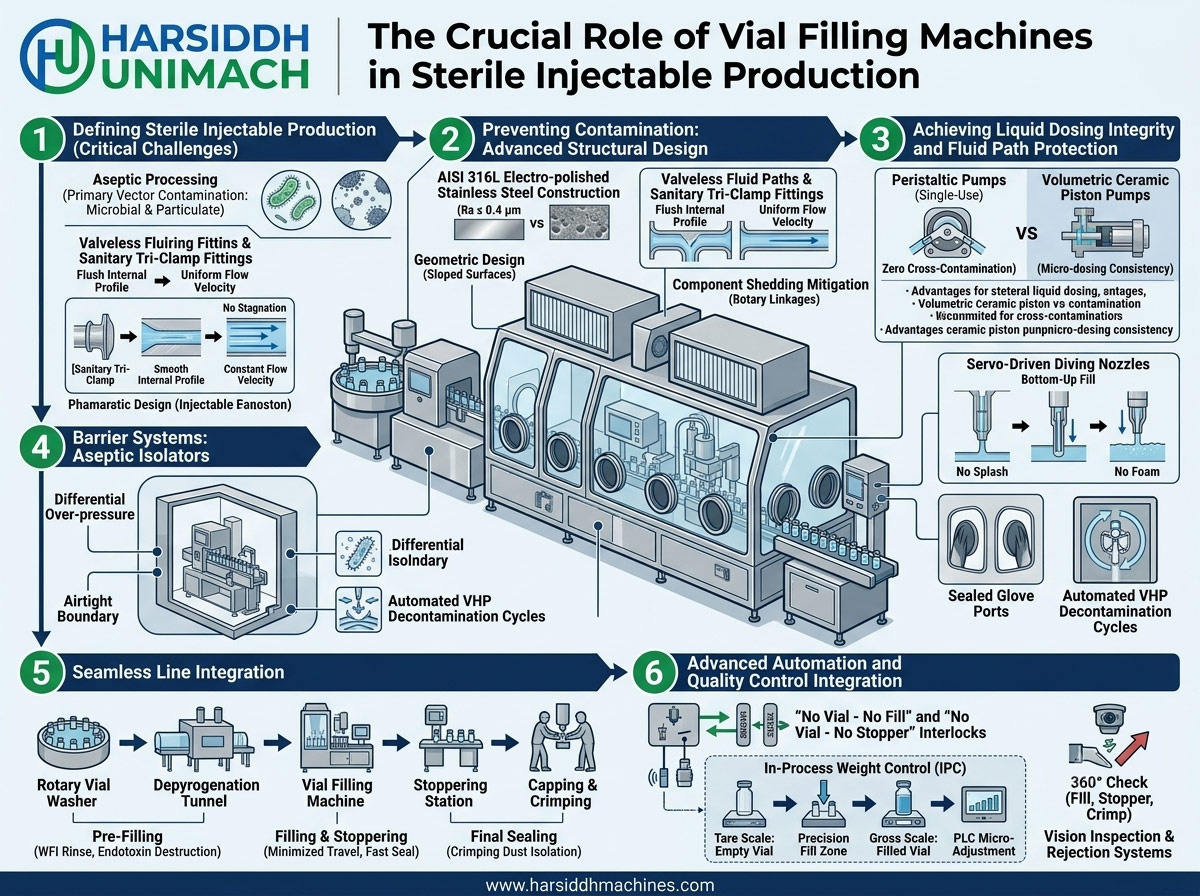
To achieve high-efficiency outputs while meeting strict international regulatory standards (such as US FDA and EU GMP), modern vial fillers incorporate several highly sophisticated engineering features:
Isolation and RABS Integration
To achieve the critical Class A (ISO 5) cleanliness required for aseptic processing, vial filling machines are frequently housed within Restricted Access Barrier Systems (RABS) or complete aseptic isolators. These enclosures maintain a continuous, laminar flow of HEPA-filtered air over the open vials, separating the mechanical process entirely from human operators.
In-Process Weight Control (IPC)
High-value pharmaceutical batches leave no room for volumetric error. Advanced lines utilize In-Process Weight Control (IPC), where a built-in balance system periodically pulls vials from the line, weighs them empty (tare), weighs them filled (gross), and calculates the exact net fill weight. If any drift in volume is detected, the system automatically recalibrates the dosing pumps on the fly.
Servo-Driven Mechanisms
Older mechanical machines relied heavily on complex chains, gears, and cams, which required lengthy manual adjustments during changeovers. Modern systems from Harsiddh Machines leverage independent servo motor drives. Servo motors provide digital control over nozzle movement, star-wheel rotation, and pumping cycles, allowing operators to switch recipes with a simple touch on an HMI screen.
5. Choosing the Right Pump for Your Formulation
The efficiency of your vial filling machine heavily depends on selecting the appropriate dosing technology for your specific product characteristics.
| Pump Type | Best Suited For | Key Advantage |
| Peristaltic Pump | Biologics, vaccines, sterile fluids, small batches | Zero cross-contamination; rapid product changeover via disposable tubing. |
| Volumetric Piston Pump | Water-thin to moderately viscous liquids, large batches | Exceptional long-term accuracy and high mechanical durability. |
| Rotary Piston Pump | High-viscosity suspensions, oils, and precise micro-dosing | Smooth fluid delivery without shearing or damaging delicate formulations. |
6. Maintenance and Cleaning Protocols (CIP/SIP)
Because these machines handle sensitive, sterile medical products, cleaning protocols must be absolute. Leading pharmaceutical vial fillers are engineered to support:
- Clean-in-Place (CIP): Automated internal flushing cycles that thoroughly clean the interior surfaces of pumps, tubes, and nozzles without dismantling the machine assembly.
- Sterilize-in-Place (SIP): The introduction of pressurized steam through the fluid pathways to neutralize any potential microbial contaminants before a new production batch begins.
Regular maintenance schedules should also include verifying sensor alignments, monitoring the wear of peristaltic pump tubing, and calibrating the crimping pressure on the capping heads to prevent glass cracking or loose seals.
Conclusion: Partner with Harsiddh Machines for Exceptional Packaging Precision
A vial filling machine is an intricate ecosystem of mechanical precision, advanced electronic sensing, and sterile engineering. Optimizing this process means investing in equipment that reduces product waste, minimizes mechanical downtime, and seamlessly integrates into your existing cleanroom workflow.
At Harsiddh Machines, we specialize in designing custom, robust packaging lines tailored specifically to your production volumes and regulatory requirements. From compact, semi-automated fillers for pilot batches to fully automated, high-speed lines integrated with RABS systems, our machinery is built to elevate your manufacturing standards.
Explore our full range of innovative pharmaceutical, liquid, and powder filling solutions by visiting our website at www.harsiddhmachines.com, or reach out to our engineering consultation team today to design your next high-efficiency production line.